How to Create FM Leads Like Fungus Funk
A glassy, sequenced FM lead in the style of Fungus Funk, built in Albino 3 Legend. FM between two oscillators makes the tone, an arp with LFOs makes the sequence, and phaser and reverb effects make it glassy. Reference tracks in the video: Fungus Funk - Super Silver and Fractal Funk.
What you need
- Albino 3 Legend (by Rob Papen) or the original Albino 3 plugin. Albino 3 Legend is the updated version with VST3 support, different GUI sizes and compatibility with current PC and Mac systems. Rob Papen Albino 3 Legend
- A DAW
Don't have Albino? Some of my wavetables were created by recording FM sounds from this exact synth. They're available both as single-cycle waveforms and as full sweeps, so you can get the same type of tones in a synth you already own. PsyTables Bundle
1. Start from a clean patch
- Open the bank (B:) and load the Init preset. This removes all effects and settings.
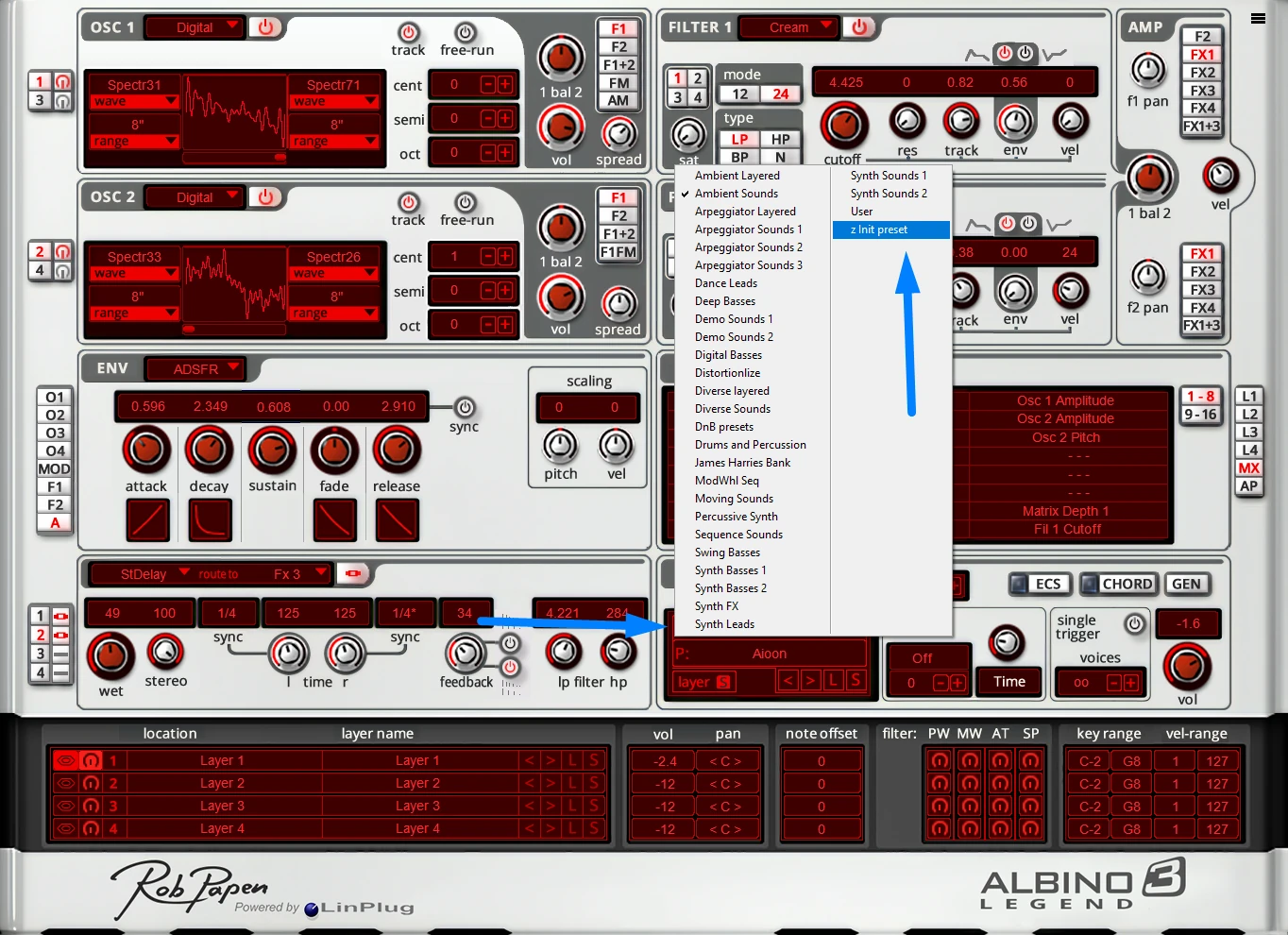
2. Oscillators and FM
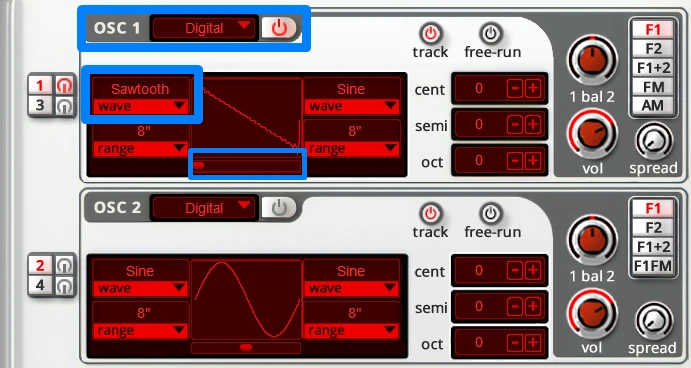
- Oscillator 1: select Digital. Use the slider between the two waveforms and set it to a sawtooth.
- Turn on FM. Oscillator 2 now frequency-modulates oscillator 1.
- Activate Oscillator 2. With FM on, the Oscillator 2 knob controls the volume and the Oscillator 1 knob controls the FM amount. Raise the FM amount until you hear the FM tone.
- Experiment with different Oscillator 2 waveforms and pick the one you like.
- Find the correct octave relationship to get the correct flavour for the FM lead.
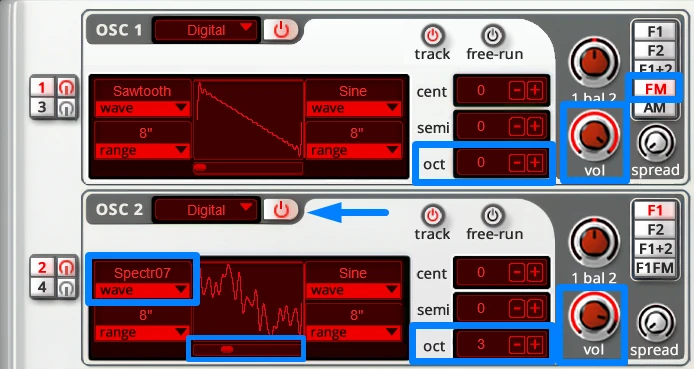
The main tone comes from changing the shapes and the FM amount, so experiment here.
3. Envelope and filter
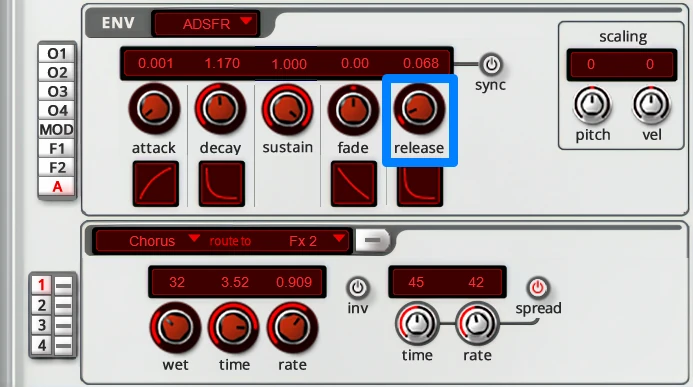
- Amp ADSR: turn the release down.
- Filter envelope: turn it off.
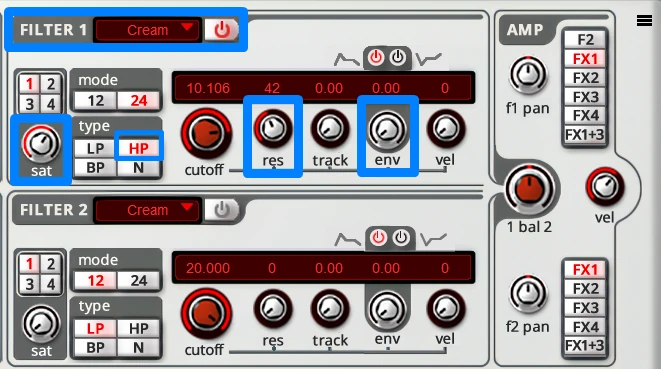
- Filter: high pass, add some saturation and resonance.
4. Make it a sequence
Arp
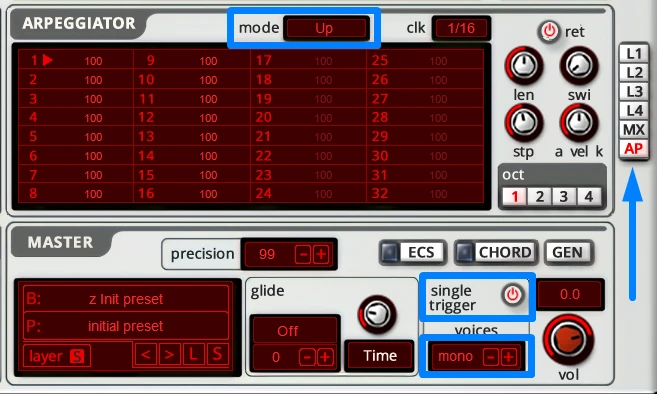
- Activate the ARP, mode Up.
- Set trigger to Single and the voice mode to Mono.
LFO 1
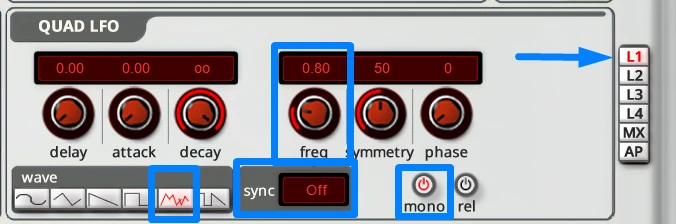
- Turn the rate down and switch sync off.
- Set the shape to a sample-and-glide type shape and activate Mono.
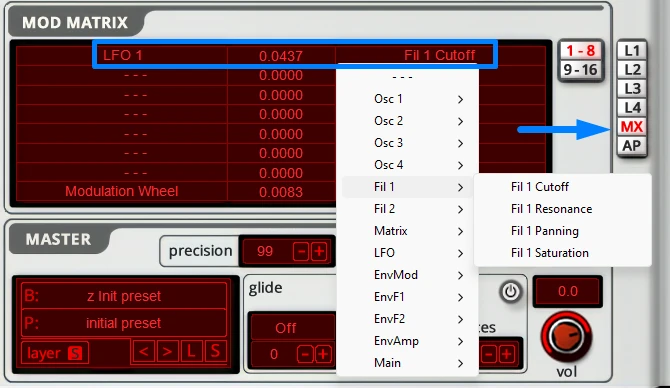
- In the matrix, map LFO 1 → Filter 1 cutoff, with a small amount.
LFO 2
- Set the shape to Sample and Hold and choose a rate. In the video i picked 1/4d
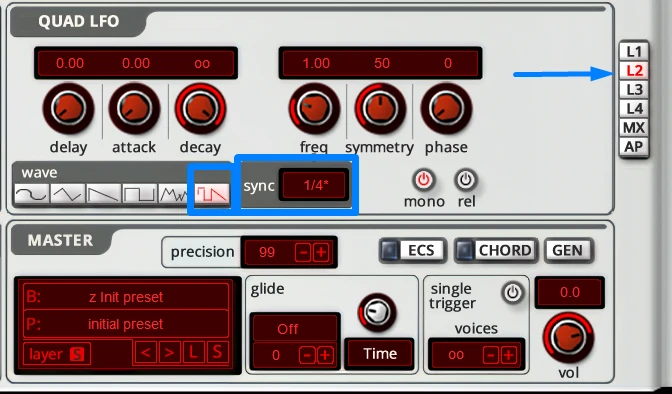
- In the matrix, map LFO 2 → Amp envelope release and maximize the amount (1.0).
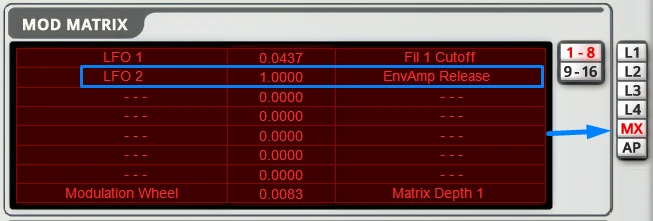
LFO 2 randomizes the release time per note, which gives the sequence its varied, rolling feel. The chopping comes from the trigger being mono, which means that it can only play one note at a time and any bleeding notes, will be gated.
5. Effects
The glassy character comes from effects. These are approximations by ear, so adjust them to taste:
- Phaser: the glassy tone is clearly a phaser. For more glassy tones, play with the resonance parameter of the phaser.
- Doubler/delay: there seems to be a doubling or delay-like layer too. Ableton's Phaser-Flanger in doubler mode was tried, as were early reflections.
- Reverb: a hybrid reverb with a convolution reverb sounded close enough.
Quick tips
- FM amount and the oscillator 2 shape change the sound the most.
- Keep the amp release short so the arp stays tight.
- Make LFO 1 → cutoff subtle.
- For glassier tones, play with the phaser's resonance.
- Don't copy the sound exactly. Use it as a base for your own.
FAQ
good to knowWhat is an FM lead?
A lead sound where one oscillator modulates the frequency of another, creating bright, metallic and glassy tones.
What synth is used in Fungus Funk tracks?
It's believed to be Albino 3, an older synth created by Peter Linsener (Linplug) together with Rob Papen and originally released in 2006. Rob Papen has since released an updated version called Albino 3 Legend, with VST3 support, different GUI sizes and compatibility with the latest PC and Mac operating systems and processors. It has flexible oscillators, four types of stereo filters, a powerful arpeggiator and a layer system for combining up to four layers in one preset, which is why it still holds up today.
How do you make the sequence sound?
Use the arp in Up mode with mono and single trigger, then modulate the filter cutoff with LFO 1 and the amp release with a sample-and-hold LFO 2.
What makes the sound glassy?
Mainly a phaser. Play with the phaser's resonance parameter for more glassy tones. Good phasers to try: Phase Mistress (SoundToys), Phaser-Flanger (Ableton), Aardvarkk Phaser (Bom Shanka Machines) and Uhbik Phaser (u-he).
Can I do this in another synth?
Yes, if it has FM between two oscillators, an arp, LFOs with sample-and-hold and a filter. If your synth uses wavetables, some of my wavetables were created by recording FM sounds from Albino, available as both single-cycle waveforms and full sweeps.
Recommended Packs

More Guides
Ableton Live Quick Tip: Using Beat Repeat as a Gate
Turn Ableton's Beat Repeat into a rhythmic gate for leads and other sounds. Set Interval, Grid and Variation, use Insert mode and turn the volume down.
Read guide →How to Import Wavetables into Popular VST Synths
Step-by-step instructions for loading custom wavetables into Serum, Serum 2, Phase Plant, Pigments, and Vital, plus tips for organizing your library.
Read guide →Why You Should Save Every Sound You Make
Why saving every preset pays off, plus naming, tagging, versioning, and backup habits for building a personal sound library.
Read guide →